
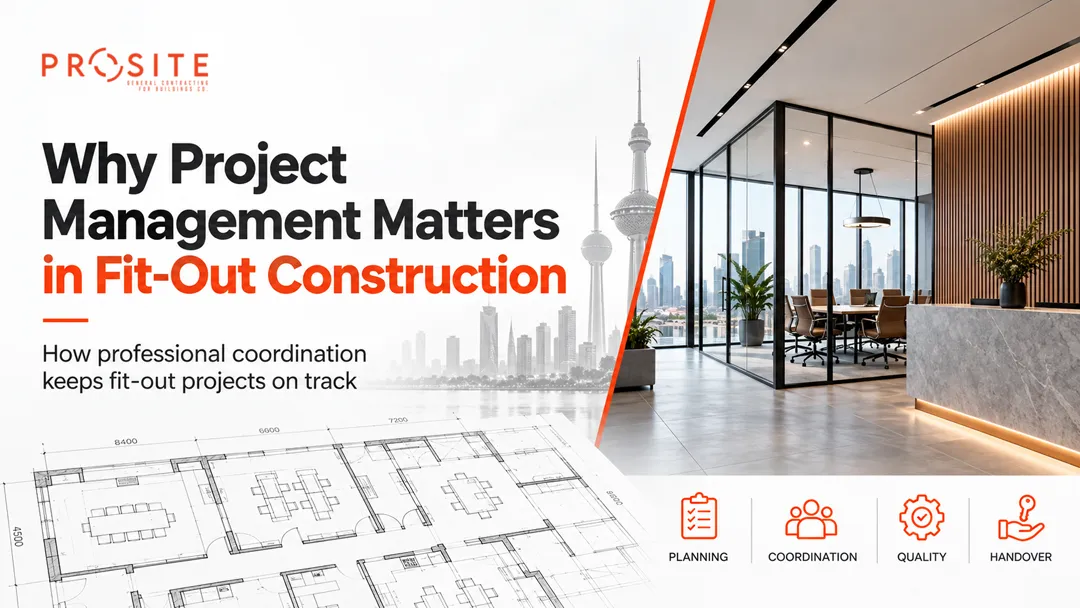
A finished office, restaurant, shop, or showroom can look surprisingly simple once everything is in place. The ceiling is complete, the lights work, the furniture sits where it should, and every finish looks intentional. What clients rarely see is everything that had to happen behind the scenes to get there.
Before that polished final result, electricians, plumbers, carpenters, painters, flooring teams, suppliers, designers, engineers, and building management may all work around the same project. Materials need to arrive at the right time. The team needs to approve drawings and check measurements. One trade often needs to finish before another can even start.
That is why professional project management is such an important part of the Best Interior Fit-out Services. A good project manager does not simply watch the site. Their job is to make sure hundreds of small decisions eventually come together as one finished space.
A Fit-Out Is Really a Chain of Connected Tasks
Imagine fitting out a new office. The ceiling contractor cannot simply close the ceiling because the team may still need to check electrical wiring, air-conditioning services, fire systems, data cabling, and lighting positions.
The flooring team cannot work efficiently if heavy construction continues across the same area. Manufacturers should not produce custom joinery using dimensions that the site team has not verified.
Furniture delivery also needs to happen at the right stage. Bring it in too early and construction activity can damage it. Bring it in too late and the delay may affect the opening date. This is where project management becomes valuable.
The Project Management Institute describes planning and scheduling as closely connected activities that translate scope, time, cost, quality, resources, risk, and other project requirements into a workable timetable. In practical terms, someone needs to know what happens first, what happens next, who is responsible, and what could delay everything else.
Why the Best Interior Fit-out Services Need More Than Good Design
A beautiful 3D design is a great starting point. It is not the finished project. There is a large gap between approving a concept and physically building it.
For example, a designer might specify a feature wall with integrated lighting and custom joinery. On paper it looks straightforward. On site, however, the team needs accurate dimensions, electrical points, suitable materials, fabrication drawings, installation sequencing, and finishing details.
If nobody coordinates these elements properly, small mistakes begin to appear. The electrical point may sit in the wrong position. The joinery may need modification. The lighting channel may not align. The team may have to remove work and complete it again.
Professional project management helps catch these conflicts earlier, when the team can usually solve them more easily.
The Project Manager Keeps Everyone Working From the Same Information
Fit-out sites move quickly. Drawings change. Clients make decisions. Teams approve materials. Site dimensions reveal unexpected conditions. Landlords may provide comments, and consultants may request modifications.
The problem is not that changes happen. Changes are normal in construction. The real problem begins when different people work from different information.
A carpenter might have an old drawing while the electrical team follows the latest revision. A supplier might manufacture something before the team confirms a final dimension. Good project management creates a clear communication path.
The project manager should make sure updated information reaches the people who actually need it. The team should document decisions and understand changes before continuing with affected work.
PMI guidance similarly emphasizes that teams should identify changes and evaluate their cost and time effects rather than handle them informally after those changes have already affected the project.
Good Communication Saves More Than Time
Communication is not just about sending progress updates. It is also about getting decisions at the right moment.
If the contractor needs the client’s flooring approval on Monday but receives it two weeks later, other activities may also move. A good project manager knows which decisions are becoming urgent and brings them to the client’s attention before they turn into delays.
That makes the process easier for the client too. Instead of speaking separately with five or six trades, they have a clearer route for questions, approvals, and updates.
Project Management Protects the Schedule
Most commercial fit-outs have a real deadline attached to them. An office may need to open before employees relocate. A restaurant may already have a launch campaign planned. A retailer may be paying rent while the store is still under construction. Every unnecessary week matters.
A proper programme allows the team to track important activities and understand which delays could affect the final handover. It also creates room for realistic planning.
A project manager can look ahead and ask practical questions:
- Has the flooring material been ordered?
- Are the custom doors already in fabrication?
- Has the lighting specification been approved?
- Will the ceiling area be ready when the next contractor arrives?
- Are long-lead materials creating a risk?
Project managers widely use scheduling as a core management tool because it allows them to compare progress against planned milestones and take corrective action when activities begin moving off track.
It Also Helps Keep Costs Under Control
Not every cost problem starts with an expensive item. Sometimes costs grow through repeated small changes.
Moving an electrical outlet after a finished wall is complete may involve an electrician, civil work, patching, painting, and cleaning. Changing a ceiling after the team has already installed lighting and air-conditioning services can have an even larger impact.
Strong coordination reduces this kind of avoidable rework. Project managers also help control variations by identifying what has changed from the agreed scope and understanding how that change affects cost and time before work continues.
This matters because schedule and cost are closely connected. Delays can affect labour, supervision, equipment, and other time-related expenses.
Quality Control Happens Throughout the Project
The team should not wait until handover day to check quality. By then, many important elements are already hidden.
Electrical cables may sit above the ceiling. Plumbing may run behind walls. Support frames may sit behind joinery. Finished surfaces may already cover waterproofing.
Professional project management includes checking work at the appropriate stage. Later, the team shifts attention to visible details such as paint finishes, flooring joints, door alignment, lighting, glass, hardware, joinery, and final cleaning.
This staged approach is especially important when businesses are paying for the Best Interior Fit-out Services and expect the finished space to look professionally completed rather than simply finished quickly.
Kuwait Projects Can Add Another Layer of Coordination
Commercial fit-out work in Kuwait can also involve property management requirements, engineering coordination, approvals, and fire-safety considerations depending on the type and scope of the project.
For certain building categories, Kuwait Municipality requirements include engineering plans and approvals related to fire prevention. Kuwait Fire Force also has procedures for approving shop drawings for systems such as sprinklers, smoke control, ventilation, and other fire-protection systems.
Not every interior project requires the same approvals, which is exactly why the project team should identify responsibilities early. Waiting until installation has already started to discover that the project requires technical documentation or approval can create avoidable delays.
Where Prosite’s Approach Fits In
Prosite currently structures its services around Design, Build, and Maintain, with build services covering turnkey fit-out projects, civil works, carpentry, electrical work, plumbing, painting, and flooring.
Projects involving several disciplines benefit when one team coordinates those activities rather than treating them as completely separate jobs.
For businesses searching for the Best Interior Fit-out Services, this is an important point to consider. The finished appearance matters, but so does the process used to get there.
Good project management connects the design team, site team, suppliers, specialist contractors, technical requirements, schedule, and client decisions throughout the project.
What Good Project Management Feels Like as a Client
You may never see most of the work your project manager does, and that is often a good sign.
You simply notice that the team answers questions clearly. Materials arrive when expected. The project manager raises problems early rather than at the last minute. You know what decisions the team needs from you. Progress makes sense when you visit the site.
There will always be challenges in construction. Professional project management does not mean pretending problems never happen. It means identifying them early, understanding their impact, finding a workable solution, and keeping the rest of the project moving.
Conclusion
Design alone does not create a successful fit-out. Hundreds of connected activities must come together through careful planning, communication, checking, and completion in the right order.
Professional project management helps protect the timeline, budget, quality, and original design intention while making the entire process easier for the client to understand.
So, when comparing the Best Interior Fit-out Services in Kuwait, look beyond the portfolio. Ask who will actually manage the project once construction begins.
The person coordinating everything behind the scenes can have just as much impact on the finished interior as the materials and design you see at the end.
Call to Action
Planning a new office, restaurant, retail space, showroom, or commercial renovation in Kuwait?
Talk to Prosite about your design, construction, project coordination, and maintenance requirements and understand how the team can manage your project from planning through final handover.