
Some businesses wait until their space becomes genuinely difficult to use before thinking about a fit-out. A door keeps sticking, so someone adjusts it again. More employees arrive, so another desk is squeezed into the corner. Extra cables appear under workstations. Storage starts overflowing. The reception still looks acceptable, but it no longer represents where the company is today.
Individually, none of these problems feels serious enough to justify a full commercial project. Together, they often tell a different story.
A professional fit-out becomes worthwhile when the space itself starts creating problems for the business. If you are wondering whether it is time to bring in a commercial fit-out contractor in Kuwait, these five signs are worth paying attention to.
1. Your Business Has Outgrown the Space Without Actually Moving
Growth does not always mean moving into a bigger property. Sometimes the problem is simply that the existing layout was designed for a much smaller business.
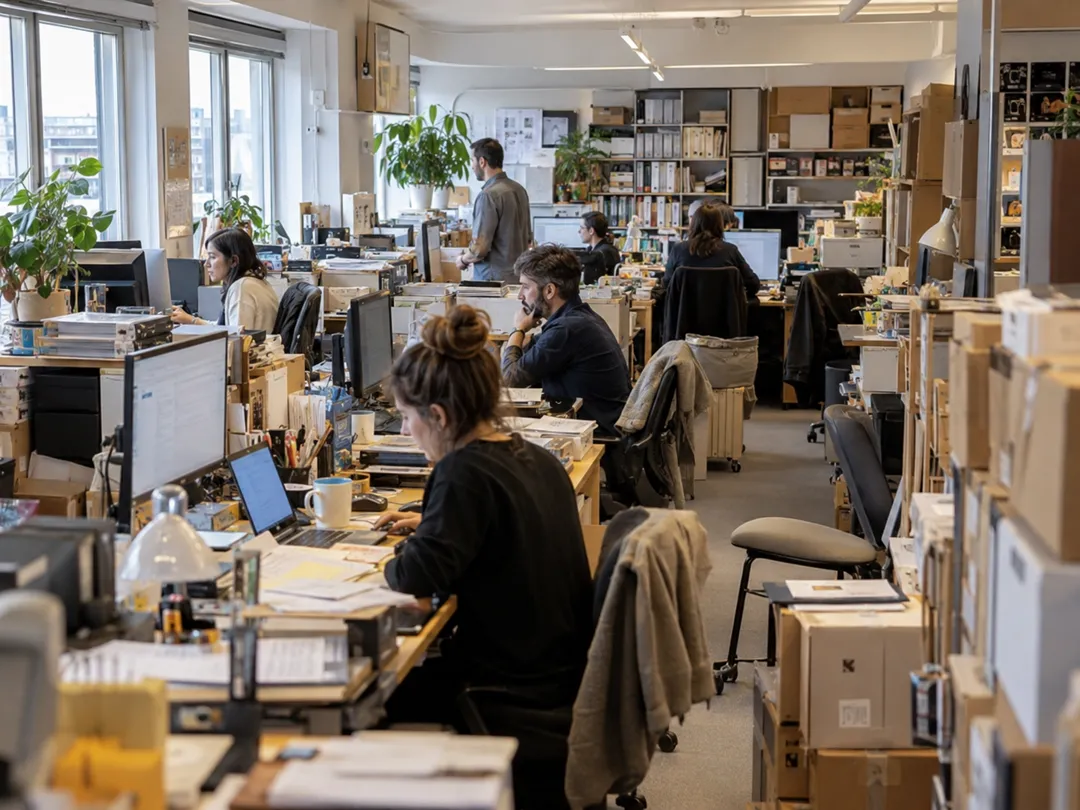
Perhaps six employees originally worked comfortably in one department and now there are twelve. Meeting rooms become temporary offices. Storage areas turn into workspaces. Staff start using corridors for quick conversations because there is nowhere else to go.
At this point, buying smaller desks is unlikely to solve the real problem. The space needs to be reconsidered.
A professional fit-out team can look at circulation, workstation density, meeting requirements, storage, unused corners, partitions, and support areas together. Sometimes a better layout can recover useful space that the business already has.
That can be far more practical than continuing to add furniture wherever it fits.
Watch for Everyday Workarounds
One of the easiest ways to identify a layout problem is to notice what employees have started doing to compensate for it.
Are meetings regularly happening in the reception area? Are people moving chairs between rooms every day? Has a storage room quietly become an office? Are employees taking calls in corridors?
These workarounds are often signs that the original layout no longer matches the way the company operates.
2. Small Repairs Are Becoming a Regular Expense
Every commercial interior needs maintenance. A damaged hinge, occasional paint touch-up, or faulty light does not mean you need a full fit-out.
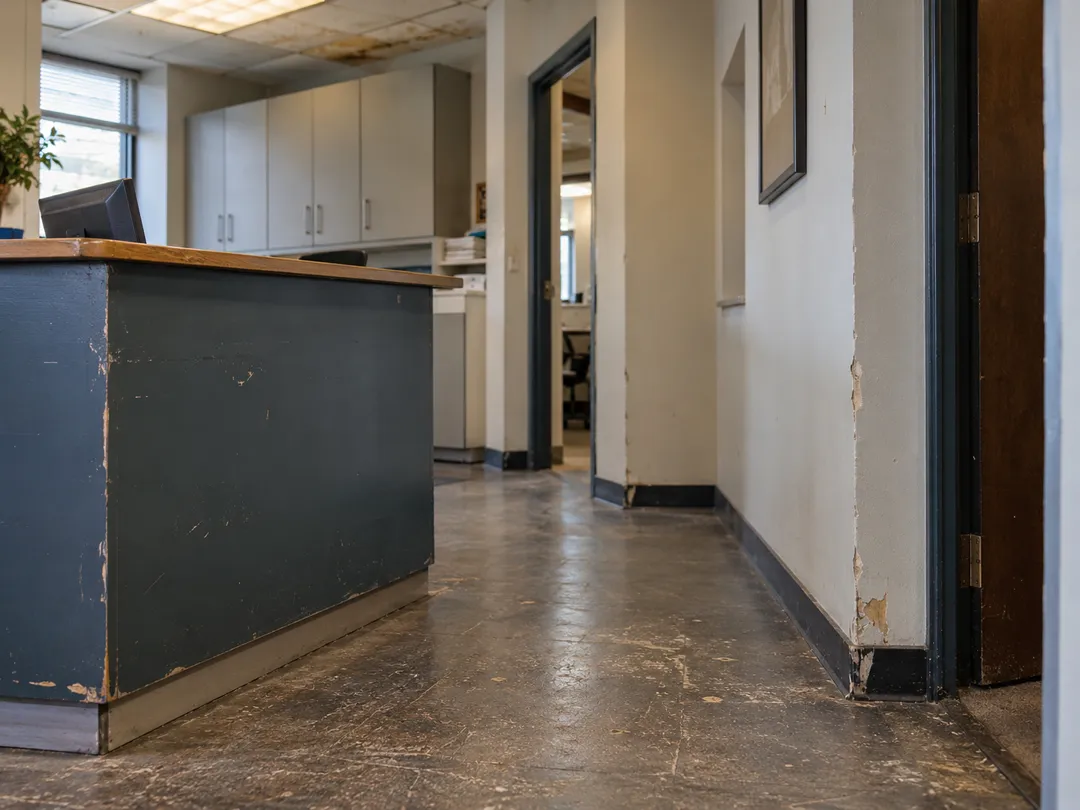
The situation changes when repairs become constant. You fix one section of flooring and another starts failing. Ceiling tiles are repeatedly replaced. Joinery looks worn in customer-facing areas. Electrical points no longer match how the office is used. Different repairs carried out over several years start making the interior look inconsistent.
At some point, continuing to patch individual problems becomes inefficient. A planned refurbishment lets you look at the whole space instead of treating each issue separately.
This can also help uncover the reason certain problems keep returning. For example, frequently damaged finishes might simply be unsuitable for the level of traffic they receive.
The solution may not be another repair. It may be choosing a better material for that location.
3. Your Interior No Longer Matches the Business Customers Meet Today
Businesses change faster than interiors. A company may have opened with a small team and modest customer base, then grown into a much more established operation.
But the physical space still looks exactly as it did five or ten years ago. That creates an interesting mismatch.
Your website may look current. The products may have improved. Your team may have grown. Meanwhile, the customer experience may be more professional.
Then someone walks into the office, showroom, clinic, restaurant, or retail space and the environment tells an older story.
A fit-out does not mean chasing trends or making everything expensive. Sometimes relatively simple changes to the entrance, lighting, customer journey, wall finishes, furniture, signage, and key focal areas can bring the environment back in line with the business.
Prosite’s commercial fit-out offering in Kuwait includes interior planning and design alongside turnkey construction services, allowing businesses to connect how a space looks with how it needs to function.
4. Every New Change Creates Another Problem
This is a particularly strong sign that the space needs professional attention. You add another workstation, but there is no convenient power nearby. A room becomes a meeting area, but the acoustics are poor.
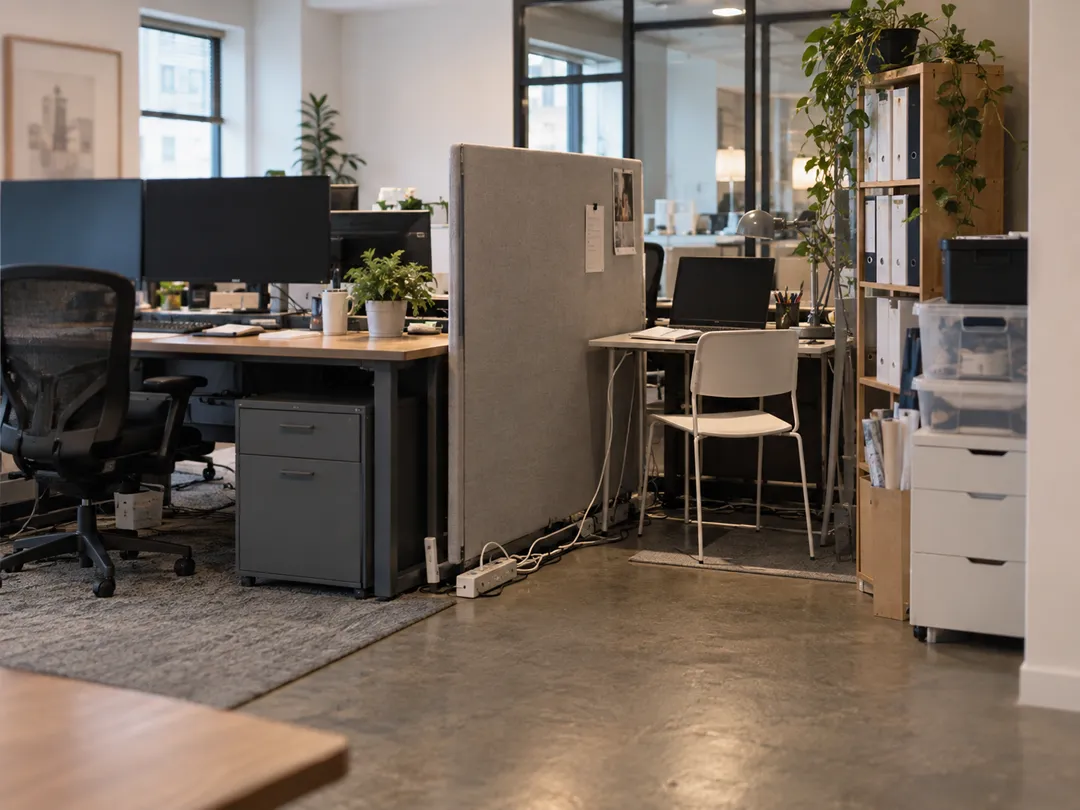
A new partition creates privacy but interferes with lighting or air distribution. More technology is installed, and cables start appearing everywhere.
These are not separate problems. They usually mean changes are being made without considering the whole interior as one connected system.
Commercial spaces involve much more than furniture and walls. Electrical work, plumbing, lighting, ceilings, flooring, carpentry, mechanical services, technology, and finishes often affect one another.
A professional contractor looks at those relationships before work begins. Prosite’s current build services, for example, cover turnkey fit-out projects as well as civil work, carpentry, electrical, plumbing, painting, and flooring.
That type of coordination becomes especially valuable when a project involves several trades rather than one simple repair.
5. You Are Opening a New Location and Do Not Want to Manage Ten Different Suppliers
A new commercial property can look wonderfully simple when it is empty. Then the supplier list begins growing.
You need someone for partitions. Someone else handles electrical work. Another company supplies flooring. A carpenter makes the joinery. Lighting has its own supplier. Furniture arrives separately.
Soon, the business owner becomes the person trying to coordinate everyone. That is manageable for a very small project.
It becomes much harder when one contractor’s work depends on another contractor finishing first. This is where a commercial fit-out contractor in Kuwait can simplify the process.
Instead of treating each trade as an isolated job, a turnkey fit-out approach brings different parts of the project into one coordinated programme. Prosite currently organizes its wider offering around design, build, and maintenance, with its build division covering multiple fit-out trades.
For a business owner, that can mean fewer disconnected conversations and a clearer route from an empty unit to a usable commercial space.
Do You Need a Full Fit-Out or Just a Targeted Upgrade?
Not every warning sign means stripping the interior back to an empty shell. Sometimes the smartest option is a targeted refurbishment.
Perhaps the basic layout works well, but reception needs updating. Maybe customer areas require renovation while staff spaces can remain largely unchanged.
An office could need better meeting rooms, acoustic improvements, and storage without replacing every desk. This is worth discussing before deciding the size of the project.
A useful contractor should be able to look at what is already working as well as what needs improvement. Replacing perfectly usable elements simply because they are existing does not automatically create a better result.
What to Do Before Calling a Fit-Out Contractor
You do not need to prepare a full design brief. Start with the problems.
Write down what frustrates you about the current space. Perhaps there is not enough storage. Customers struggle to understand where reception is. Employees complain about noise. Certain rooms are rarely used while other areas are permanently crowded.
Also think about what might change over the next few years. Will the team grow? Will customers visit more frequently? Are you adding new services?
This information gives a fit-out team something far more useful than simply saying, “We want the office to look modern.”
When Prosite Can Help
If several of these signs sound familiar, it may be time to look at the space as a complete business environment rather than a collection of individual repairs.
Prosite works across design, construction, and maintenance for commercial interiors in Kuwait. Its services include space planning and customized interior design together with turnkey fit-out, carpentry, electrical, plumbing, painting, flooring, and ongoing maintenance support.
That can be useful whether you are taking possession of a new commercial unit or trying to make an existing space work better.
Conclusion
Most businesses do not suddenly wake up one morning and discover that their interior has stopped working. The signs usually appear gradually.
The team grows. Storage disappears. Repairs become frequent. Customer areas start looking dated. Every new piece of equipment makes the layout slightly harder to manage.
Eventually, the space begins asking the business to compromise. That is often the right time to speak with a commercial fit-out contractor in Kuwait.
A well-planned fit-out should solve practical problems first and improve the appearance of the space as part of the same process. Because the real goal is not simply to have a newer interior.
It is to have a commercial space that supports where the business is going next.
Call to Action
Has your office, restaurant, retail space, showroom, or other commercial property stopped working as well as it should?
Talk to Prosite about the problems you are experiencing, your future requirements, and the type of improvements your space may need.